One Step Behind and Slow Cooked Italian Sausages with Lentils

Dear Joey,

Ever since I can remember I have been one step behind. I am rarely on the cutting edge of anything, which doesn’t bother me exactly, for the most part. I mean, my iPad is over five years old, I thought midi dresses were called “tea-length”, and while I have heard of Chewbacca Mom, I have not seen the video. For the most part, being on the tail end of trends like these does not bother me too much.

When it does bother me, though, is when there is something I really do care about, something I really am interested in and I find out someone else had that exact same idea, or that someone else beat me to the punch on putting their spin on whatever “thing” it is that’s taking up space in my dreaming heart. I think that fear has kept me from making the jump from dreaming to doing.

Stay with me: let’s talk shoes for a moment.

IMG_3824

When I was in Junior High (back when it was still called Junior High), I was behind on what was cool and what wasn’t, not for lack of caring, but because by that time keeping up with my friends came with a price tag that my babysitting jobs couldn’t cover very quickly. I either had to save up for the things I really wanted or beg my parents for them. Take shoes, for example. There was this pair of black velvet Vans that I just had to have. I knew I would wear them with everything if I could only just get my hands on them, a vow I swore to my mom when I begged her to upgrade my Payless knock offs to these much cooler originals. I don’t remember if she put out the cash for them or if I did, but what I do remember is that when I finally got a pair, another girl at school had already gotten the same ones–and this girl was older, prettier, and far more popular than I was. To my insecure heart, this was a fate worse than not having the shoes at all: it made me look like I was copying her.

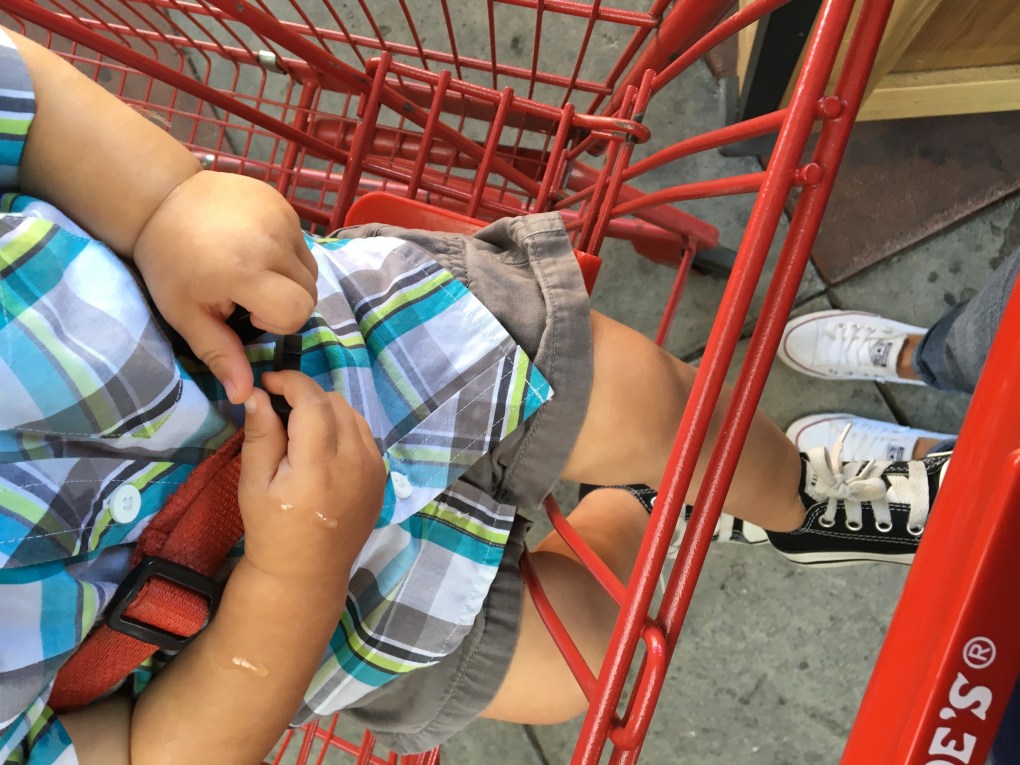
Not much has changed. This sort of thing happened to me again this year, more than 20 years later. I rarely shell out money for new shoes these days (a scar from long ago perhaps?), but when I laid eyes on a pair of slip-on white Converse, that all changed. I pined after them during pregnancy, knowing that as soon as my feet shrunk back to their normal size again (fingers crossed), I would treat myself to a pair. That day finally came, and I wore them all the time. But not long after I got them, I spotted them on a fellow preschool mom during morning drop off. As we waved hello in passing, I smiled and silently prayed she didn’t think I was copying her.
IMG_3808

How silly am I for thinking anyone gives that sort of time and energy to thinking about my choice in shoes? Who cares? They are cute shoes and a lot of people like to wear them. End of story. Right?

I’m not sure. I think there is a deeper issue here, one that I am still trying to figure out and understand. I want to be original and affirmed for being a cool kind of different, but I do not want to be so outside the norm that I am weird–in my style, sure, but more than that, what I do with my life, how I create art and live a life in keeping with that.

For some reason, shoes sort of speak to that. What sort of people wear socks with sandals?  Ballet flats? Platforms? Gladiators? Tom’s? Crocks? Running shoes (without the slightest sign of being used for running)? Impossibly high pumps? Converse? I bet you could take a room full of random people, sort them by their shoes, and within each group there would be many similarities among the people therein. They probably share a lot of the same basic personality traits and values.

But when I think about it a little more, the girl in Junior High who had those Vans and the fellow preschool mom both were a little similar to me. I remember the girl in Junior High as being somewhat soft-spoken, easy going, and down to earth. The fellow preschool mom is warm, kind, and laid back. Both balance out their louder and more gregarious counterparts. These are my sort of people, in other words. Perhaps I ought to see them as kindred spirits, people who share the same sort of values and ideals I have.

IMG_3836

Which brings me to the whole idea of comparing myself to women walking the path in their professional lives I keep dreaming of walking too. It seems anytime I get a good idea, I come to find out that someone else has had that idea too. Instead of seeing it as an opportunity to learn from them and add my two cents to the discussion, I shy away and figure the topic is already covered. The world will keep turning if I don’t share my favorite new recipe, right?

What if I renewed my thinking, so that the proverbial competition became companions walking along the same path with me–not in front, nor behind, exactly, but beside. The world will not change, but maybe I will.

Love,
Scratch

Slow Cooked Italian Sausages with Lentils
One Step Behind and Slow Cooked Italian Sausages with Lentils

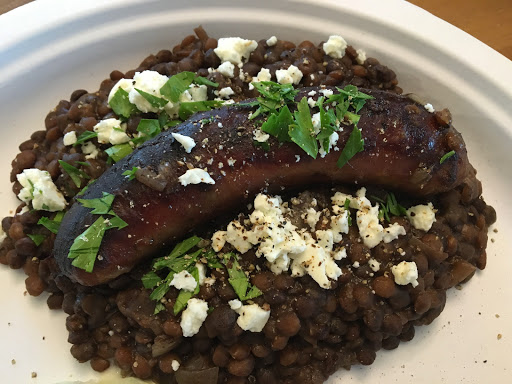
When the weather took a turn for the worst (read: hot), I heeded Joey’s plea and did my best to keep the stove turned off–a difficult task with a broken grill, I might add.  I started using my Crock Pot instead, even though I find the flavors and textures of slow cooked meals tiresome during the summer, when things should be fresh and light, not laden with warmth and comfort. But this recipe.  I made it ages ago, on the stove, during the winter, but inspiration struck me in the middle of a hot July day and I cooked it in the Crock Pot. Easy, flavorful, fancy even (for essentially being a peasant-style dish), and perfect with a glass of our favorite wine. It would be a simple freezer meal to throw together too (in which case do not bother browning the sausages first. Skipping that step will change the end result slightly, but sometimes a short cut like that is worth it on a hot day). To make it truly dairy free, skip the garnish of cheese at the end. 

Ingredients:

1 1/4 cups French lentils (also known as Puy lentils, or lentilles du Puy)
2 cups water
1/2 cup red wine (such as Cabernet Sauvignon)
1 medium yellow onion, diced
2 large cloves garlic, smashed
6 Italian sausages (mild or hot; uncooked)
1 teaspoon red wine vinegar
1 teaspoon salt
Freshly ground pepper, to taste
Fresh parsley and crumbled feta cheese (or shaved Parmesan) for serving

Method:

First, brown the sausages on at least two sides, but all four (or close to all four) is best. Meanwhile, rinse and sort through the lentils, making sure to remove any stray little stones. Then, combine lentils, water, wine, onion, garlic, red wine vinegar, salt and pepper in the bottom of a slow cooker. Give it a good stir, and then nestle the sausages on top, submerging them just a little bit (as best you can).

Cook on high for 4 hours*. When ready to serve, adjust seasoning as needed (need salt? Stir some more in. Flavor taste a little flat? Stir in a splash or two more of red wine vinegar). Sprinkle fresh parsley and crumbled feta (or shavings of fresh Parmesan cheese) on top for serving.

*Alternatively, cook on low for 6 hours (or so). Crock pots seem to vary in their heating power, so keep that in mind and keep use these cooking times as a guide.  Lentils cook much faster than a big batch of beans, so be careful not to overcook them (they turn mushy, and of course, could burn–even in a crock pot!).


Victory! and Spicy Herbed Chicken and Quinoa Salad with Cucumber Ribbons

Dear Joey,

I don’t remember dinnertime being difficult when I was a kid. It was fun. Maybe the best part of the day.

Over the past year I have wondered why my memories of family dinner are so warm and low-key when our own family dinners aren’t always the same way. I should give myself a break – our oldest isn’t even five yet, for goodness sake.

I think the biggest difference between my memories of those days and our own reality is my folks were really relaxed when it came to meal time. Meaning, they kept calm if we refused to touch the food on our plate–as far as I remember, at least. If we didn’t like it, there was always a peanut butter sandwich.

In dealing with our own kids, I try to do my best to follow my parents’ lead; keep calm and let them be in charge of what they eat from their plate. As long as they have healthy choices, why should I insist they eat just one more bite before they are allowed to be excused? But the reality is that we have been super tense about eating and frustrated when our kids misbehave at the table (shocking!) or refuse to eat what they are given.

The girls come by it honestly, I guess. My mom tells the story of how she had to finish her peas before she was excused from the dinner table as a kid. She hated peas. I mean hated. But she finally figured out if she swallowed them like little green pills, washing them down with a big gulp of milk, she wouldn’t taste them and she would be allowed to leave table. And let’s not forget your brother’s legendary attempts and “cleaning his plate” – your parents found food hidden in house plants, radiators, you name it: anywhere your brother could surreptitiously stash it without getting caught (until months later, at least).

As much as we laugh about these anecdotes now, I don’t really want history to repeat itself. I’d rather we make the dinner table a fun place to be and help our kids enjoy their food, as much as we can at least.

So far, it’s sort of in-between. We have a long way to go, but we are making progress. I’m pretty sure our two hard-and-fast mealtime rules help:

1. Try at least one bite of everything on your plate. If you do not like it, you do not have to eat it.
2. There is nothing else to eat other than what is served. If you do not want to eat it, that’s ok. But you will not eat again until the next snack or mealtime.

For the most part, these rules work for us. Everyone knows them, and since we are consistent with them there isn’t room for negotiation.

It wasn’t always that way. At first, the girls protested. They whined and complained and feigned disgust and spit food out and begged for macaroni and cheese, or yogurt, or crackers — just like most toddlers are prone to do. But slowly, they came to realize that the food they’re given is all they get, and when they see us eating it, they figure it can’t be all that bad (I suppose).

Here’s the thing that helps me stick to the rules myself: I make sure to offer something I know they will actually eat (like rice and broccoli). Then, I challenge them with something fairly familiar they will probably like if they just try it (like salmon). And third, I add something I am fully prepared for them to hate (like artichokes) just to see if they might have a taste for it.

Before I sound like a total organized, over-achieving freak, let me say this: I often repeat the things I challenge them with, typically things we like to eat (like salad) or things they typically like (such as carrots) that are prepared in an unfamiliar way (like roasted carrots).

Apparently, this is working because in just the past few weeks, things have changed. Whereas it used to be that everything except the vegetables disappeared at dinnertime, now the veggies are being eaten up, too.

First, Addie starting eating coleslaw. Coleslaw! Then she declared her undying love for bell peppers. Not long after that, she braved a bite of a single green bean, a pesky dinnertime menace that has taunted her since infancy. When she announced she liked it, I almost fainted. Mia looked on with a face that seemed to say “Big deal. I have been telling you they are good for ages.” It was not a fluke: Addie ate an entire helping of them that night, and another helping of them a few nights later, and on it continues to go, assuring me that she does, in fact, like them.

Next, just this past weekend (at a pizza parlor!), Addie ordered a green salad and a meatball for dinner. A salad?! Like, a real one. With romaine and tomatoes and peppers and stuff. When I picked off a tomato for myself (thinking she would not notice), she protested, insisting, “But I wanted to eat that tomato!” (I am sure she must have thought I was nuts for the befuddled look I gave her.)

To top it all off, just this past Monday night, when presented with cucumbers, Addie sighed and said, “Oh, yes! I love these!” And both girls began to eat those cucumbers (and broccoli, I might add) with gusto, before they even touched their quinoa and chicken. And they both asked for seconds and fought over who got to polish off the broccoli. Holy moly.

Before I sound all braggy about these successes (too late?), I must admit that they also prefer to eat their fair share of not-so-healthy foods too (like the goldfish crackers they are eating for snack this afternoon), and this morning at breakfast they turned their noses up to my first attempt at waffles made with almond flour. I guess they are not perfect eaters, are they?

But I give them a lot of credit because they really are quite good at trying new things now, and perhaps it is because they know from experience they might find another yummy food to enjoy, and if they don’t, well, they know we will not force them to eat it.

To me? That is a victory.

Love,
Scratch

Spicy Herbed Chicken and Quinoa Salad with Cucumber Ribbons

Victory! and Spicy Herbed Chicken and Quinoa Salad with Cucumber Ribbons

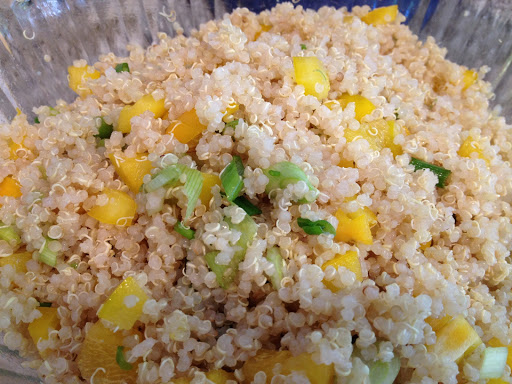
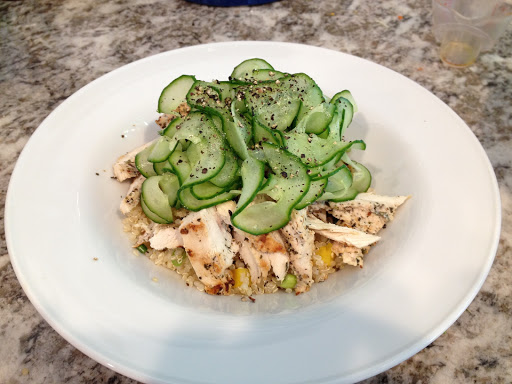
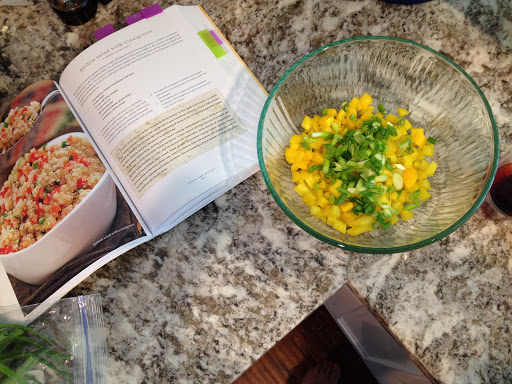
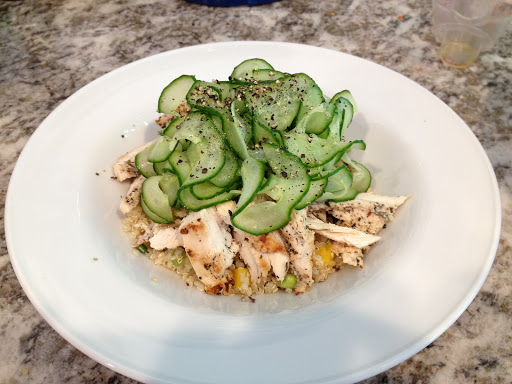
This is one of Joey’s current dinner favorites, and I love it because it makes everyone at our table happy. Based on the recipe for Quinoa Salad with Vinaigrette in Artisanal Gluten-Free Cooking, my version uses yellow bell peppers and adds spicy, herb-laden grilled chicken and quick pickled cucumber, spiralized so they look like ribbons. The chicken is pounded thin, but feel free to skip that step, but do not let the other steps fool you into thinking this dinner is difficult to pull together. It’s quite easy, and you can do many of the steps ahead of time.

Ingredients:

Spicy Herbed Chicken
5 boneless chicken breasts, pounded flat to about 1/4″
1/3 cup lemon juice
2 tsp olive oil
1 1/2 tsp dried basil
1 1/2 tsp dried oregano
1/4 tsp (or more) red pepper flakes (optional)
course salt and freshly ground pepper, to taste

Quinoa Salad
1 cup uncooked quinoa, rinsed
1 yellow bell pepper, diced small (or any color you prefer)
3 scallions, chopped
1/4 cup red wine vinegar
2 tsp olive oil (or up to 1/4 cup, but we keep the oil content low to make this a super light meal)
salt and pepper to taste

Quick Pickled Cucumber Ribbons

1 English cucumber
about 2 T white vinegar
sweetener of choice, to taste (equivalent to about 2 teaspoons cane sugar)

Method:

For the chicken
Place pounded chicken breasts into a zip top bag, along with all the marinade ingredients (except the red pepper flakes if your kids are like mine and do not like spicy food. You can always sprinkle the flakes on the adults’ chicken right before grilling it.) You may add an additional 1 1/2 T of olive oil if you like, but we keep it minimal for this recipe. Massage the marinade into the chicken and let rest for a couple hours, or overnight. Then grill the chicken, about 3-4 minutes per side if it’s pounded thin. When done, remove from heat and let rest, then slice before plating the salad.

For the quinoa
Bring 1 cup quinoa to a boil in 2 cups water. Once boiling, reduce heat and let simmer for 15 minutes. Let rest for 5 minutes, then fluff with a fork. Refrigerate until ready to make the salad. Meanwhile, dice 1 yellow bell pepper and slice three scallions. (I cut mine on the bias because I think it feels fancy, but do it however you prefer.) Toss the veggies with the cooked and cooled quinoa. Add the red wine vinegar and olive oil, and season with salt and pepper. Start with about 1/4 tsp course salt to begin with, and add more to your liking.

For the cucumbers

Using a Spiralizer, slice the cucumbers into ribbons. (If you don’t have a Spiralizer, use a mandolin to cut the cucumber into thin slices in the meantime. If you don’t have a mandolin, slice the cucumbers as thin as you can. And if you have trouble doing that, just chop some up. The texture will be different than ribbons, but the flavor will still be great.) After the cucumbers are cut, toss them with a couple tablespoons of white vinegar along with a dash of salt and the sweetener of your choice, about the equivalent of 2 teaspoons of regular cane sugar. Let them sit for a few minutes and toss again before serving.

To serve
Scoop about a cup of the quinoa salad into a shallow bowl, followed by a sliced up chicken breast, and finally topped with cucumber ribbons. Top with freshly ground black pepper, if desired.


Victory! and Herbed Chicken and Quinoa Salad with Quick Pickled Cucumber

Dear Joey,

I don’t remember dinnertime being difficult when I was a kid. It was fun. Maybe the best part of the day.

Over the past year I have wondered why my memories of family dinner are so warm and low-key when our own family dinners aren’t always the same way. I should give myself a break – our oldest isn’t even five yet, for goodness sake.

I think the biggest difference between my memories of those days and our own reality is my folks were really relaxed when it came to meal time. Meaning, they kept calm if we refused to touch the food on our plate–as far as I remember, at least. If we didn’t like it, there was always a peanut butter sandwich.

In dealing with our own kids, I try to do my best to follow my parents’ lead; keep calm and let them be in charge of what they eat from their plate. As long as they have healthy choices, why should I insist they eat just one more bite before they are allowed to be excused? But the reality is that we have been super tense about eating and frustrated when our kids misbehave at the table (shocking!) or refuse to eat what they are given.

The girls come by it honestly, I guess. My mom tells the story of how she had to finish her peas before she was excused from the dinner table as a kid. She hated peas. I mean hated. But she finally figured out if she swallowed them like little green pills, washing them down with a big gulp of milk, she wouldn’t taste them and she would be allowed to leave table. And let’s not forget your brother’s legendary attempts and “cleaning his plate” – your parents found food hidden in house plants, radiators, you name it: anywhere your brother could surreptitiously stash it without getting caught (until months later, at least).

As much as we laugh about these anecdotes now, I don’t really want history to repeat itself. I’d rather we make the dinner table a fun place to be and help our kids enjoy their food, as much as we can at least.

So far, it’s sort of in-between. We have a long way to go, but we are making progress. I’m pretty sure our two hard-and-fast mealtime rules help:

1. Try at least one bite of everything on your plate. If you do not like it, you do not have to eat it.
2. There is nothing else to eat other than what is served. If you do not want to eat it, that’s ok. But you will not eat again until the next snack or mealtime.

For the most part, these rules work for us. Everyone knows them, and since we are consistent with them there isn’t room for negotiation.

It wasn’t always that way. At first, the girls protested. They whined and complained and feigned disgust and spit food out and begged for macaroni and cheese, or yogurt, or crackers — just like most toddlers are prone to do. But slowly, they came to realize that the food they’re given is all they get, and when they see us eating it, they figure it can’t be all that bad (I suppose).

Here’s the thing that helps me stick to the rules myself: I make sure to offer something I know they will actually eat (like rice and broccoli). Then, I challenge them with something fairly familiar they will probably like if they just try it (like salmon). And third, I add something I am fully prepared for them to hate (like artichokes) just to see if they might have a taste for it.

Before I sound like a total organized, over-achieving freak, let me say this: I often repeat the things I challenge them with, typically things we like to eat (like salad) or things they typically like (such as carrots) that are prepared in an unfamiliar way (like roasted carrots).

Apparently, this is working because in just the past few weeks, things have changed. Whereas it used to be that everything except the vegetables disappeared at dinnertime, now the veggies are being eaten up, too.

First, Addie starting eating coleslaw. Coleslaw! Then she declared her undying love for bell peppers. Not long after that, she braved a bite of a single green bean, a pesky dinnertime menace that has taunted her since infancy. When she announced she liked it, I almost fainted. Mia looked on with a face that seemed to say “Big deal. I have been telling you they are good for ages.” It was not a fluke: Addie ate an entire helping of them that night, and another helping of them a few nights later, and on it continues to go, assuring me that she does, in fact, like them.

Next, just this past weekend (at a pizza parlor!), Addie ordered a green salad and a meatball for dinner. A salad?! Like, a real one. With romaine and tomatoes and peppers and stuff. When I picked off a tomato for myself (thinking she would not notice), she protested, insisting, “But I wanted to eat that tomato!” (I am sure she must have thought I was nuts for the befuddled look I gave her.)

To top it all off, just this past Monday night, when presented with cucumbers, Addie sighed and said, “Oh, yes! I love these!” And both girls began to eat those cucumbers (and broccoli, I might add) with gusto, before they even touched their quinoa and chicken. And they both asked for seconds and fought over who got to polish off the broccoli. Holy moly.

Before I sound all braggy about these successes (too late?), I must admit that they also prefer to eat their fair share of not-so-healthy foods too (like the goldfish crackers they are eating for snack this afternoon), and this morning at breakfast they turned their noses up to my first attempt at waffles made with almond flour. I guess they are not perfect eaters, are they?

But I give them a lot of credit because they really are quite good at trying new things now, and perhaps it is because they know from experience they might find another yummy food to enjoy, and if they don’t, well, they know we will not force them to eat it.

To me? That is a victory.

Love,
Scratch

Herbed Chicken with Quinoa Salad and Quick Pickled Cucumbers

Victory! and Spicy Herbed Chicken and Quinoa Salad with Cucumber Ribbons

This is one of Joey’s current dinner favorites, and I love it because it makes everyone at our table happy. Based on the recipe for Quinoa Salad with Vinaigrette in Artisanal Gluten-Free Cooking, my version uses yellow bell peppers and adds spicy, herb-laden grilled chicken and quick pickled cucumber cut into spirals, so that they look like ribbons. The chicken is pounded thin, but feel free to skip that step, but do not let the other steps fool you into thinking this dinner is difficult to pull together. It’s quite easy, and you can do many of the steps ahead of time.

Ingredients:

Herbed Chicken
5 boneless chicken breasts, pounded flat to about 1/4″
1/3 cup lemon juice
2 tsp olive oil
1 1/2 tsp dried basil
1 1/2 tsp dried oregano
1/4 tsp (or more) red pepper flakes (optional to give it a spicy kick)
course salt and freshly ground pepper, to taste

Quinoa Salad
1 cup uncooked quinoa, rinsed
1 yellow bell pepper, diced small (or any color you prefer)
3 scallions, chopped
1/4 cup red wine vinegar
2 tsp olive oil (or up to 1/4 cup, but we keep the oil content low to make this a super light meal)
salt and pepper to taste

Quick Pickled Cucumber Ribbons

1 English cucumber
about 2 T white vinegar
sweetener of choice, to taste (equivalent to about 2 teaspoons cane sugar)

Method:

For the chicken
Place pounded chicken breasts into a zip top bag, along with all the marinade ingredients (except the red pepper flakes if your kids are like mine and do not like spicy food. You can always sprinkle the flakes on the adults’ chicken right before grilling it.) You may add an additional 1 1/2 T of olive oil if you like, but we keep it minimal for this recipe. Massage the marinade into the chicken and let rest for a couple hours, or overnight. Then grill the chicken, about 3-4 minutes per side if it’s pounded thin. When done, remove from heat and let rest, then slice before plating the salad.

For the quinoa
Bring 1 cup quinoa to a boil in 2 cups water. Once boiling, reduce heat and let simmer for 15 minutes. Let rest for 5 minutes, then fluff with a fork. Refrigerate until ready to make the salad. Meanwhile, dice 1 yellow bell pepper and slice three scallions. (I cut mine on the bias because I think it feels fancy, but do it however you prefer.) Toss the veggies with the cooked and cooled quinoa. Add the red wine vinegar and olive oil, and season with salt and pepper. Start with about 1/4 tsp course salt to begin with, and add more to your liking.

For the cucumbers

Using a Spiralizer, slice the cucumbers into ribbons. (If you don’t have a Spiralizer, use a mandolin to cut the cucumber into thin slices in the meantime. If you don’t have a mandolin, slice the cucumbers as thin as you can. And if you have trouble doing that, just chop some up. The texture will be different than ribbons, but the flavor will still be great.) After the cucumbers are cut, toss them with a couple tablespoons of white vinegar along with a dash of salt and the sweetener of your choice, about the equivalent of 2 teaspoons of regular cane sugar. Let them sit for a few minutes and toss again before serving.

To serve
Scoop about a cup of the quinoa salad into a shallow bowl, followed by a sliced up chicken breast, and finally topped with cucumber ribbons. Top with freshly ground black pepper, if desired.


A Living Cookbook and Greek Chicken-Lemon Soup

Dear Joey,

As you know, I have a major weakness for cookbooks. If I happened upon an extra bit of money that I could spend on anything, you and I both know I would blow it on a new pile of cookbooks. Never mind the fact that I have three shelves full of them; I can confidently admit that I simply do not have enough of them. There’s always a new release I’m dying to get my hands on; an elusive, hard-to-come-by classic; those charming old cookbooks all tattered and splattered and dog-eared and very well-loved; and the ones I’ve never heard of that I fall madly in love with the moment I lay eyes on the cover.

I seem to go in phases with my cookbooks, working my way through them for a good solid year (at least), learning from them, experimenting with them and being inspired by them. Two years ago, I was all about the family meal. Bringing home baby number two compelled me to take a peek at how other mothers created the sacred rhythm of the family dinner in their own homes. (With two under two? What was I thinking?). Books like Jenny Rosenstrach‘s Dinner: A Love Story, and Laurie David and Kirstin Uhrenholdt‘s The Family Dinner were my guideposts. My cheerleaders.

A year later, disenchanted with the American food system (with particular regard to its meat supply), I was all about vegetarian cuisine and Mark Bittman‘s How to Cook Everything Vegetarian and Mollie Katzen‘s The Moosewood Cookbook took up permanent residence in my collection. (Her divine recipe for pita bread is worth finding a copy of your own). And then, cookbook/memoirs took center stage in my cookbook repertoire, and I was convinced that life would be perfect if all cookbooks were written the way that  Shauna Niequist‘s Bread & Wine and Louisa Weiss’s My Berlin Kitchen were written.


This year, finally in a kitchen of my very own, and backed with an arsenal of family friendly, environmentally sound, healthy and delicious recipes (that were sure to create a sense of belonging for my little brood), I headed into my kitchen with confidence and my copy of Alana Chernila‘s The Homemade Pantry. If I could make it myself, I was going to. Bring on the memory making.

Before long, the books sat on the kitchen bookshelf, unused. The kitchen was quiet, and I sat idly by. Perceptive little Mia caught me gazing longingly at them during dinner one night. She asked what I was looking at, which snapped me out of my little reverie and made me realize just how much I missed pulling up a chair at someone else’s table, to be inspired by their stories instead of just by their recipes. I didn’t really do that anymore.

Dietary changes made it too painful to thumb through the pages of these books. The recipes reminded me of a time when thinking about eating healthy meant balancing food groups, limiting the bad stuff, going organic and non-GMO. Now, eating healthy meant eating so I didn’t feel like I was dying.

If last year’s theme of my kitchen life was the nostalgic joy of cooking, this year’s theme so far has largely been get me through this meal unscathed. Luckily, for me, it wasn’t really hard to figure out how to cook a meal without any grains in it (Grill some chicken. Steam some veggies. Done.)

The problem is cooking food like that is not my idea of fun–and you know me: I love to cook! And plus, I am so over reading about how and why to cut grains out of the diet. The majority of cookbooks I have read lately devote so much time and energy on explaining the perils of wheat and corn and soy and even rice (among so many others), and spend so very little time on the story behind the food they are promoting as healthy, let alone the story behind the recipes themselves.


For me, cookbooks are not so much about learning how to cook, but more about why to cook. Reading them is like peeking into the food life of other people, people who have gone, seen and learned things that I have not. Getting cozied up on the couch with one is not about making a list of ingredients and techniques to master; it’s about steeping myself in another person’s story, imagining the tastes and smells and experiences of another place and perspective for a moment, connecting to the heart of why they cook and being inspired to continue to refine the cooking culture here in our own kitchen.

If you have not figured it out by now, let me drive the point home: for me, cooking much more than prepping fuel to feed our bodies. It is feeding our spirits and nourishing our souls and creating a way of life within our home, knitting together bits and pieces of our collective pasts with the here and now of where we are as a family. It is celebrating heritage and creating a sense of belonging. It is hard to find a gluten-free cookbook (or grain-free one, for that matter) written from that perspective.

I had the loveliest conversation with my dad earlier this week. We were in the midst of running a not-so-fun errand and we found ourselves exchanging gluten-free/grain-free recipes. Ever the cook, he’s been low-carb for years and is always happy to share his recipes for some really yummy foods. I heard all about his lasagna-like casserole (where kale takes the stage), and I told him about my version of Greek chicken-lemon soup (where cauliflower works its cameleon magic). We talked about ingredients and methods, certainly, and also about how delicious the food was and how we really didn’t miss the grains at all. It was nice to share stories with someone who gets it, you know?
Embracing the gluten-free/grain-free way of eating in my own home and filling in my family on the why’s and how’s of why we’re eating differently feels funny enough, but talking about food and cooking with people who aren’t gluten-free or grain-free is even harder. (What do you eat? What do you cook? Is it hard?) So many casual conversations don’t have the room for a genuine answer. Thank God for the handful of people who have come alongside me this week- my dad and two of my dearest friends in the world (both of whom I rarely see–both in the same week!) to ask these questions and to listen to the real answer.

The real answer is Yes, it’s hard, and also No, it’s not hard at all. It is hard to give up the idea and the sentiment of the foods I used to eat. It is not hard to eat differently, especially when the food tastes as good as it does. Yes, it is hard to want to eat anything when you feel like you are dying, and no, it is not hard to not eat the things that make the pain worse.

It has been a week of talking these things out with people who care about me, about us. Talking about the things that are true and good and hard and important. Sharing meals, meager or strange as they may seem. Reliving old memories and being inspired to reinvent old recipes. Creating new memories that inspire new recipes.

I guess this week I learned that my life is a living cookbook, the one I have been looking for.

Love,
Scratch

Greek Chicken-Lemon Soup

adapted from Dinner: A Love Story‘s Avgolemeno

A Living Cookbook and Greek Chicken-Lemon Soup

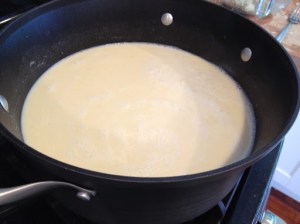
It may not look like much, but this recipe is proof that it is possible to cook delicious and satisfying food without grains. A favorite of Joey’s, Avgolemeno is typically made with orzo or rice, but my version uses riced cauliflower. Before you freak out, think about this: both my 3 1/2 year old and my 2 year old devoured it. I call that a success. 

Ingredients:

4 cups gluten free chicken broth
10 oz. cauliflower
1 small onion
1 T butter (or ghee or olive oil or, or, or….)
4 large eggs
1/4 c lemon juice
1 1/2 c cooked and shredded chicken
salt & pepper, to taste

Method:

First, make sure you have pre-cooked chicken to work with. Leftover roast chicken works well here, or just throw a chicken breast or two in the crock pot for a couple hours. When done, shred the chicken and set aside a cup and a half for the soup. Or more, or less. Whatever you like.

Next, prep the cauliflower. You could use a cheese grater to “rice” the cauliflower (more time; courser texter), but I use a food processor (less time, finer texture). If you use a food processor, throw the onion in with the cauliflower to process in one easy step. If you don’t use a food processor, chop the onion finely after you finish preparing the cauliflower.

In a soup pot over medium high heat, add the butter (or other fat) and the cauliflower & onion. Sautee for a few minutes – about five or so – until the veggies are fairly soft. Add the broth and bring to a boil.  Lower heat to a bare simmer (low heat).

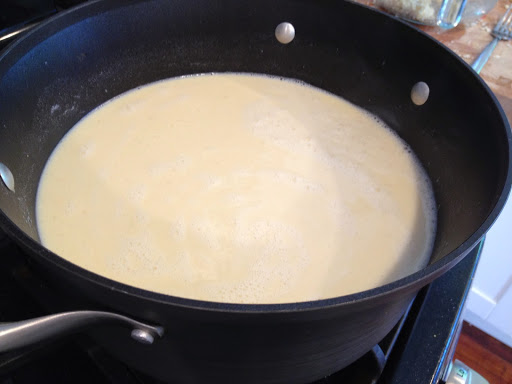
Meanwhile, whisk together the eggs and the lemon juice. Then, ladle in a scoop of the simmering broth and whisk to combine. Then, pour back into the soup pot, whisking as you do so. The broth will turn opaque. Add the chicken and let the soup simmer for about 4 minutes to allow the eggy broth to cook. Add the salt and pepper to taste, adjusting as needed, and serve. Sprinkle dill on if you so desire.

Oh yeah, and DO NOT BOIL unless you want a curdled mess.